

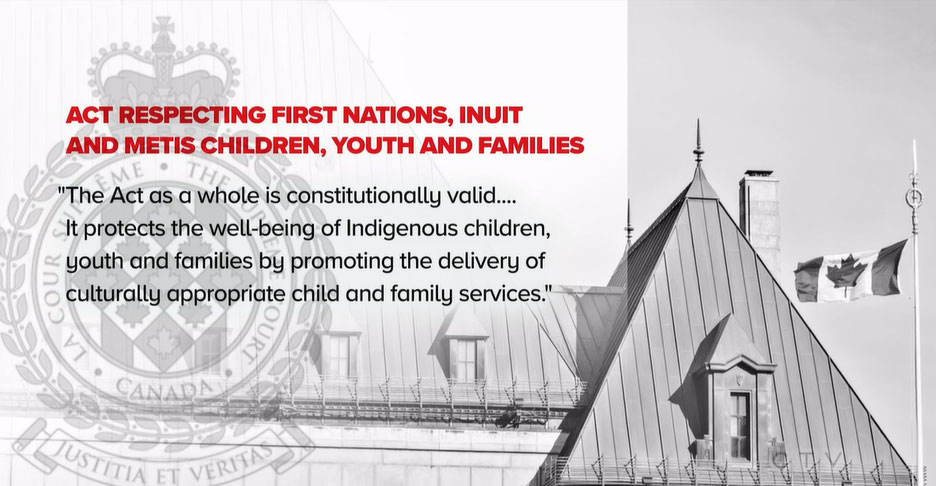
In a historic decision last Friday, the Supreme Court of Canada unanimously upheld the federal government’s Indigenous Child Welfare Act, granting Indigenous communities across the country the sole authority over the protection of their children. This landmark ruling marks a significant step towards self-governance and cultural preservation for Indigenous Peoples, who have long grappled with the devastating impacts of colonial child welfare systems.
The 2019 Act, which was challenged by the Quebec government, affirms the inherent right of First Nations, Métis, and Inuit Peoples to self-government, including control over child and family services. This decision overturns a 2022 Court of Appeal ruling that found parts of the Act to be unconstitutional.
Indigenous leaders and communities erupted in celebration upon hearing the news. Cindy Woodhouse Nepinak, National Chief of the Assembly of First Nations, called it “a significant step forward” and a reaffirmation of the “inherent and constitutional right” of Indigenous Peoples to care for their own children.
The decision holds immense significance for Indigenous children who have historically been disproportionately placed in foster care systems far from their communities and cultural roots. Prime Minister Trudeau acknowledged the past harm inflicted and emphasized the importance of cultural connection for Indigenous children, stating, “That has perhaps gotten them out of harm’s way in the immediate, but has left them with scarring – loss of identity, loss of language and a disconnection from their cultures that has had devastating impacts.”
The ruling garnered positive reactions from across the political spectrum, with leaders from both the Conservative and NDP parties expressing support for Indigenous autonomy and self-governance.
This landmark decision paves the way for further advancements in Indigenous self-determination and reconciliation. It empowers Indigenous communities to design and implement culturally appropriate child welfare services that prioritize the well-being of their children and families while upholding their unique traditions and identities.
However, challenges remain. Implementation of the Act will require significant resources and collaboration between Indigenous communities, federal and provincial governments. Additionally, concerns remain regarding the ongoing impact of colonial child welfare systems and the need for broader systemic change.
Despite these challenges, the Supreme Court’s decision marks a turning point in the history of Indigenous child welfare in Canada. It offers a powerful message of hope and recognition, moving the country closer to a future where Indigenous Peoples have the power to determine their own destinies and ensure the well-being of their children for generations to come.